When Should You Redesign Jewelry You Inherited?
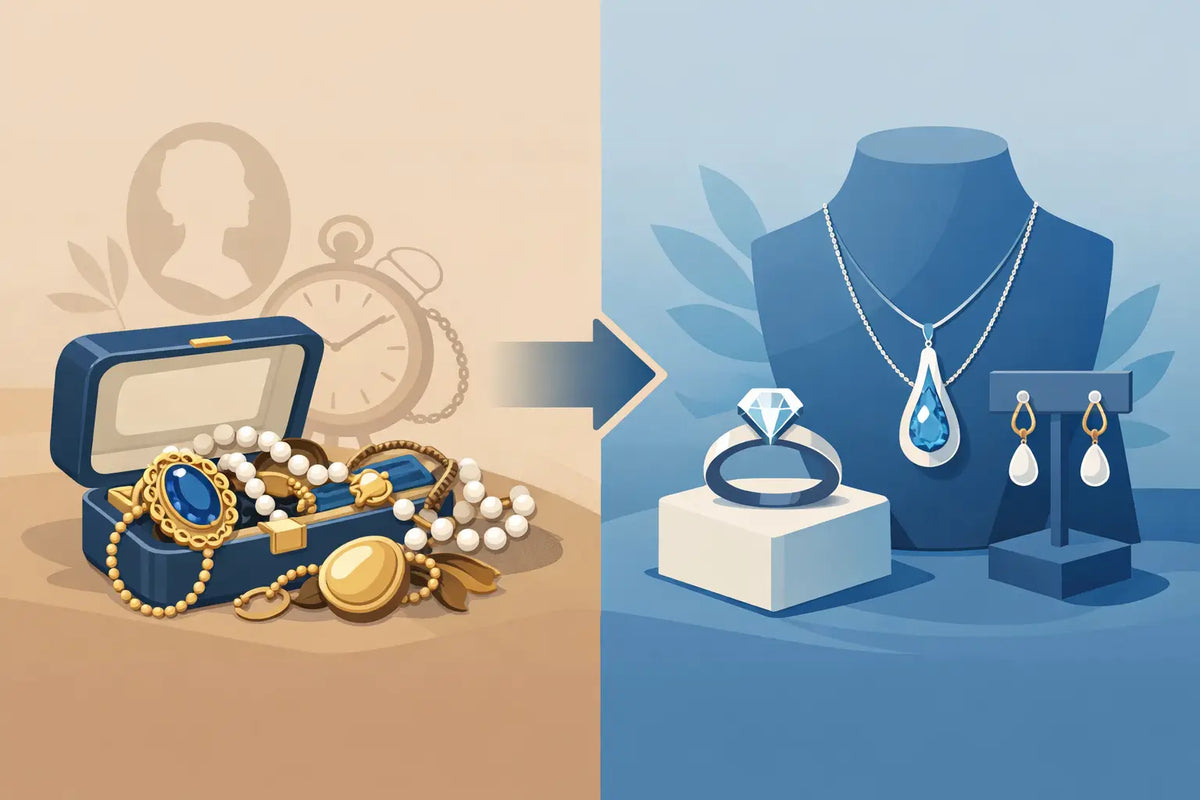
A ring that has slept in a velvet box for years can carry two feelings at once: deep affection for the person who wore it and a quiet certainty that it is not quite yours yet. If you are asking when should you redesign jewelry, the answer is rarely about following a trend. It is about recognizing when a treasured piece deserves a new chapter - one that allows its history to remain close while making room for the life you live now.
Redesigning is not erasing. Done thoughtfully, it is an act of stewardship: preserving a grandmother's diamond, a father's signet, or the gold that marked a long-ago anniversary, then giving it the sunlight, movement, and daily meaning it was meant to have.
When should you redesign jewelry?
The most compelling reason is simple: you want to wear it, but you do not. Perhaps an inherited brooch feels too formal for your wardrobe, or a ring's tall setting catches on every sweater. Maybe several small stones sit in a dated mounting, beautiful but unseen. Fine jewelry is made to be lived with, not only safeguarded.
A redesign can translate an heirloom's materials into a form that feels instinctive to you. An old solitaire might become a low, luminous ring designed for everyday hands. A pair of mismatched earrings can become a pendant or a pair of petite charms. A yellow gold chain may be reworked into a bracelet with a clasp that feels secure enough for constant wear.
There is no requirement that a piece be antique, damaged, or exceptionally valuable before it earns this consideration. Sometimes the right moment arrives with a new season of life: a marriage, a baby, a birthday, a career milestone, or the settling of an estate. Jewelry often holds memory most beautifully when it is allowed to meet the present.
When the setting no longer protects the stone
Practical concerns are often the clearest signal. Worn prongs, a thinning shank, loose stones, damaged clasps, and fragile links should be evaluated promptly by a skilled jeweler. Repair may be all that is needed, especially if a setting has historical character worth retaining. But when repairs become frequent, or when the structure cannot safely support the stone, redesigning may offer a more lasting solution.
This is especially true for rings worn every day. A new setting can lower a stone, strengthen its protection, and improve comfort without changing the stone that makes the piece meaningful. The goal is not to make an heirloom look new at any cost. It is to make it secure enough to become part of your real life.
When the design belongs to another era, not another heart
Taste changes, and so do the rhythms of our days. A dramatic cocktail ring may have suited its original owner perfectly, yet feel too ornate for someone who lives in crisp shirts, soft knits, and a few well-loved gold pieces. That does not make the ring less special. It simply means its design may need translation.
Before remaking it, spend time identifying what you love about the original. Is it the center stone, the engraved detail, the warm patina of the gold, or the story of who gave it? Those answers create a design brief with emotional clarity.
A sensitive redesign might preserve an engraved date inside a new band, set original diamonds in a modern cluster, or turn one substantial piece into two smaller ones for sisters or daughters. The result can feel wonderfully intimate: familiar enough to recall what came before, but personal enough to reach for without hesitation.
There is a trade-off to consider. A complete transformation can make the original form impossible to recover. If its silhouette is central to the memory, a careful restoration may be the better choice. If the materials and the person behind them matter more than the mounting itself, redesign can be a beautiful way forward.
When an heirloom has more than one story to tell
Some pieces arrive with enough material for a small constellation of new objects. A strand of pearls may become pendants for family members. Diamonds from an unworn anniversary ring could become a necklace and a pair of earrings. This approach can be especially meaningful when jewelry is being shared among generations.
Still, division is not always the answer. A single stone may lose visual presence when separated into tiny accents, and an original piece can have value as a complete historical object. Ask whether the emotional intention is to preserve one person's piece intact or to create tangible connections for several people. Neither choice is more loving. They simply honor memory differently.
If you are redesigning jewelry after a loss, give yourself time. There is no deadline imposed by the drawer, the estate, or anyone else's expectations. Living with a piece for a season can reveal whether you want to wear it as it is, alter it gently, or leave it untouched until the right idea arrives.
Begin with the materials, not the mood board
A beautiful redesign begins with an honest assessment. Before falling in love with a sketch, have the piece examined for stone condition, metal purity, inscriptions, maker's marks, and construction. Certain antique cuts, unusual gems, and signed pieces may be better conserved than remade. A professional appraisal can also establish value and document the original jewelry before any work begins.
Not every material can be reused in the same way. Diamonds are generally durable, but stones such as emeralds, opals, pearls, turquoise, and older gemstones may require special handling. Gold can often be refined and incorporated into a new piece, though some jewelers prefer to source fresh metal for consistency, strength, and precise alloy color. If retaining the original gold matters to you, say so early and ask what is technically possible.
Photos are useful, but they cannot replace seeing a stone in person. Its proportions, color, inclusions, and wear will shape the design. The most lasting custom work respects those realities rather than forcing a stone into a setting chosen only for its appearance on a screen.
Questions worth asking before you commit
A considered conversation with your jeweler should cover more than the final look. Ask whether the original piece should be documented, whether each stone is suitable for resetting, and what elements can be preserved. Discuss the metal, the security of the setting, expected maintenance, insurance, timeline, and budget before the work begins.
It is also wise to ask what will happen to any unused stones or metal. Request that remaining materials be returned to you when possible. Even a small fragment of an original piece can hold sentiment, whether it becomes a future charm, rests in a keepsake box, or simply remains part of the family archive.
Choose a design you can live in
The finest redesigns feel less like an occasion and more like a second skin. Consider how you use your hands, whether you wear other rings, the jewelry tones you return to, and the moments when you most want the piece beside you. A design for daily wear may call for a lower profile, rounded edges, a secure clasp, or stones nestled close to the metal.
Timeless does not have to mean restrained. It can mean choosing details with staying power: a sculptural bezel, a softly engraved edge, a hand-finished surface, or a quietly unexpected proportion. Let the new piece speak in your own language rather than attempting to recreate someone else's.
At Fourteen August, the idea of reviving cherished jewelry is rooted in this kind of attention. A meaningful redesign should feel like memory made wearable - something that catches the light at breakfast, accompanies a long summer dinner, and gathers new associations with every year.
Let the piece become part of your life again
The right time to redesign jewelry is when preservation and wear can meet each other with care. You do not need to wait until a setting fails or a style feels completely foreign. You only need a reason that feels true: to protect a stone, honor a person, mark a change, or bring a hidden treasure back into the daylight.
Keep the original story close, but do not be afraid to add your own. The most beloved heirlooms are rarely the ones kept perfectly still. They are the ones that continue to travel through a family, warm from the skin, carrying old memories into new ones.