How to Redesign Inherited Jewelry Well
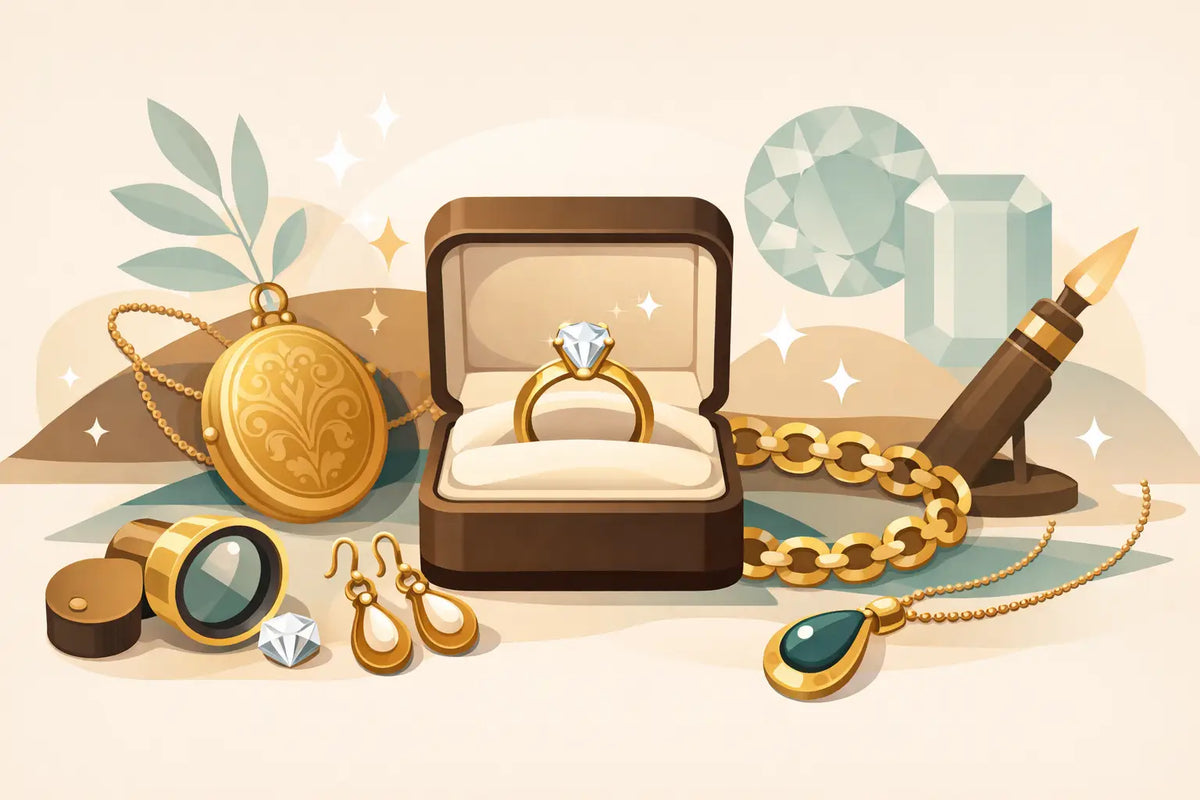
A velvet box tucked into a drawer. A ring wrapped in tissue from a grandmother's bureau. A chain you have not worn once, yet cannot imagine parting with. When considering how to redesign inherited jewelry, the real question is rarely just aesthetic. It is how to honor a life, a memory, and a story while making the piece feel at home on your own skin.
Inherited jewelry carries a particular kind of weight. Sometimes it arrives with a clear history - an engagement ring, a charm bracelet built over decades, a pendant worn every day until the clasp softened with time. Sometimes it comes with mystery. A brooch you never saw her wear. A diamond set in a style that feels more formal than your life. The redesign process lives in that tender space between preservation and transformation.
How to redesign inherited jewelry without losing its meaning
The best redesigns begin slowly. Before discussing stone sizes, metal color, or settings, spend time with the piece as it is. Notice what draws you in. It may be the engraving hidden inside a band, the slightly imperfect cut of an older stone, or simply the feeling that a certain piece belonged unmistakably to one woman and no one else.
That emotional inventory matters as much as the physical one. Some elements should stay untouched because they carry the soul of the original piece. Others can change without loss. A dated mounting can be replaced. A long strand can become layers. Several unworn pieces can be brought together into one modern heirloom. But if the sentiment lives in a specific detail, redesign should protect it.
This is where restraint becomes a kind of luxury. Not every inherited piece needs a dramatic reinvention. Sometimes the most beautiful answer is a light restoration, a shortened chain, a refined clasp, or a new setting that lets an old stone breathe again.
Start with what the piece means to you
Jewelry redesign is often presented as a design exercise. It is also an emotional one. Ask yourself what you want to feel when you wear the finished piece. Close to her? More like yourself? Elegant enough for every day? Significant enough for a milestone?
Those answers shape the design more thoughtfully than trend references ever will. If the goal is daily wear, the piece should be durable, comfortable, and quietly versatile. If the goal is ceremonial - a wedding, an anniversary, a future gift to a daughter - then a more formal design may make sense. Neither is more correct. It depends on how the jewelry will live with you.
It also helps to decide whether you want the redesign to read as clearly inherited or simply deeply personal. Some women want to preserve a visible thread to the past, such as resetting a family diamond in a timeless solitaire or incorporating original gold into a new band. Others prefer a subtler approach, where the history is known only to the wearer.
Assess the jewelry before you redesign it
Before any sketch is made, inherited jewelry should be evaluated for both sentimental and practical value. Fine jewelry often contains more possibility than first appears, but not every part of a piece can or should be reused.
Stones need to be checked for chips, wear, and structural integrity. Older cuts are often full of character, but they may require specially considered settings. Metal should be tested as well. Vintage alloys can behave differently than newly cast gold, and some older components are better preserved than melted down. If a piece includes pearls, enamel, or delicate antique details, redesign may call for a gentler hand.
There is also the matter of value beyond emotion. Inherited jewelry may have historical or estate significance that would be diminished by heavy alteration. A signed vintage piece, for instance, might be worth preserving intact. If a piece is rare or especially representative of its period, redesign is not always the strongest choice. Sometimes the wiser decision is to restore it, wear it differently, and let its original character remain.
Decide what to keep, what to change, and what to combine
This is often the turning point. Once you understand the piece emotionally and structurally, you can begin to edit with intention.
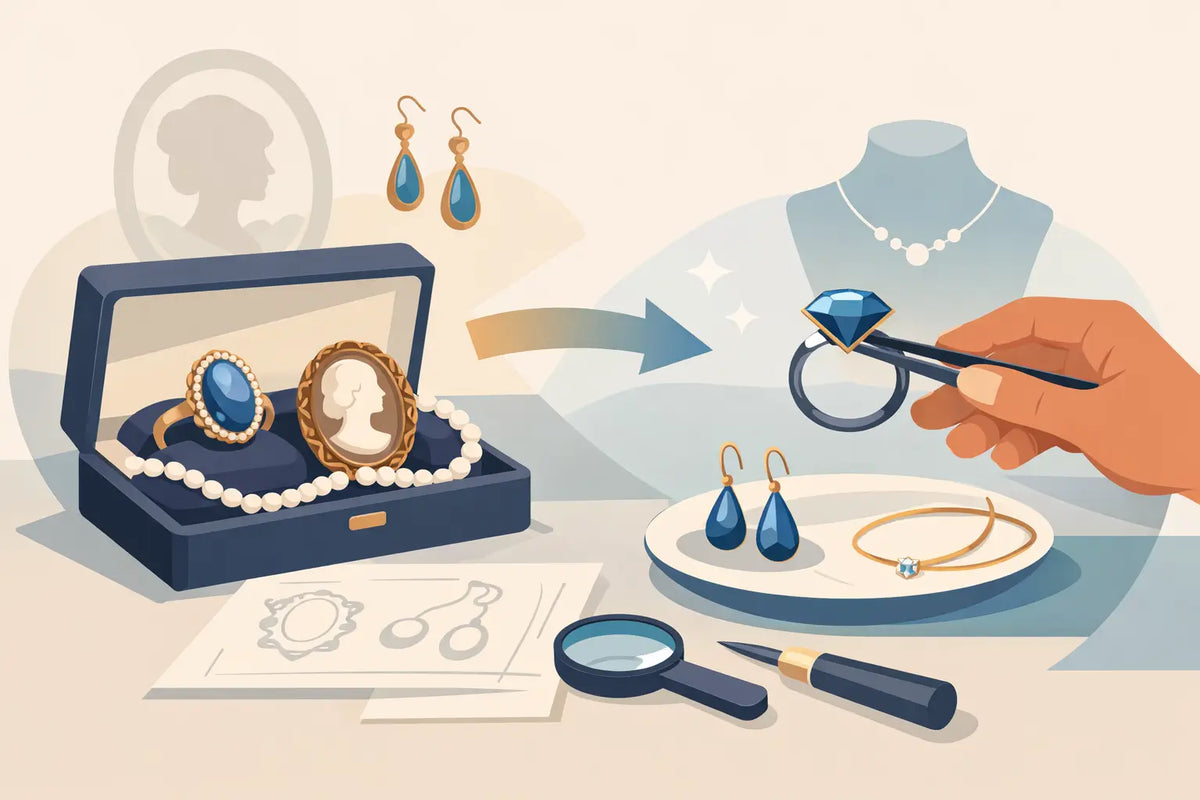
A single inherited ring may become a necklace if you are not a ring wearer. A pair of earrings missing one mate can provide stones for a new pendant. Several family pieces sitting separately in boxes can be combined into one design with coherence and grace. Done well, this does not erase history. It gathers it.
Still, more is not always more. Combining too many inherited elements can create a piece that feels overly symbolic and hard to wear. The goal is not to force every memory into one object. The goal is to create a piece that carries meaning naturally.
Think about proportion and lifestyle. A large cocktail ring inherited from an older relative may be magnificent, but if your style leans understated, the stone may be better suited to a low-profile ring or pendant. A formal brooch may become a charm. A cluster of small diamonds may add softness to a modern band. The transformation should reflect your life now, not an imagined version of it.
Choose a timeless design language
When learning how to redesign inherited jewelry, one of the most useful principles is to design for longevity, not novelty. The piece has already survived one lifetime. Ideally, it should move beautifully into the next.
That does not mean the design must be traditional. It means it should feel settled rather than trend-bound. Clean lines, balanced proportions, thoughtful settings, and a strong sense of wearability tend to age well. The most enduring redesigns have clarity. They know what they are trying to preserve, and they do not distract from it.
Metal choice plays a quiet but important role. Yellow gold can preserve warmth and familiarity, especially if the original piece was worn for decades in that tone. White gold or platinum may give an inherited diamond a cleaner, more architectural feeling. Rose gold can soften certain designs, though it is often best chosen because it suits the wearer rather than because it feels current.
Scale matters too. If the finished piece is too precious to wear, redesign has missed something. Inherited jewelry should not live only in a safe or appear only at formal dinners. Very often, the loveliest redesign is the one you reach for on an ordinary Tuesday.
Work with a jeweler who understands sentiment
Technical skill is essential, but with inherited jewelry, emotional fluency matters just as much. You want a jeweler who can discuss setting styles and stone security, yes, but also one who understands that redesigning family jewelry is not the same as creating something new from scratch.
A thoughtful jeweler will ask about the story behind the piece, how you want to wear it, and what details matter most. She will also be honest when an idea sounds beautiful in theory but may not wear well in practice. That kind of guidance protects both the integrity of the jewelry and the feeling attached to it.
This process should feel collaborative, not rushed. The right partner brings calm, discretion, and clarity. At Fourteen August, that philosophy is central to custom work - creating pieces that hold memory with elegance, rather than overwhelming it.
Give yourself permission to make it yours
There can be quiet guilt around redesigning inherited jewelry, especially if the original style is not one you would ever choose. But jewelry becomes heirloom not simply because it is old. It becomes heirloom because it is loved, worn, and carried forward.
Leaving a meaningful piece untouched out of obligation may preserve its form, but not necessarily its life. A redesign, handled with care, can return it to the body. It can bring sunlight back to a stone that has sat in darkness for years. It can make memory visible again in a way that feels intimate and true.
Sometimes that means preserving almost everything. Sometimes it means changing nearly all of it except a single diamond or a handwritten engraving. Both can be acts of respect.
The most successful redesigns are not driven by pressure to modernize. They come from a desire to continue the story in a way that feels honest. If the finished piece reminds you where you came from and still feels unmistakably like you, that is enough. Let it be worn. Let it gather new memories. Let it become part of the life you are building now.