Jewelry Restoration Case Study of a Renewed Ring
Some pieces arrive with a story already pressed into the gold. In this jewelry restoration case study, a family ring that had spent years tucked safely away was reimagined for daily wear, without asking it to surrender the memory that made it precious.
The ring belonged to our client’s grandmother, a woman remembered for summer lunches by the water, lipstick on a coffee cup, and an instinct for keeping the beautiful things in life close. Its sapphire had softened at the edges from decades of wear. The delicate prongs had thinned. Its setting, once graceful, had begun to catch on knits and feel too fragile for a life outside its velvet box.
The question was not whether the ring could be repaired. It was how to let it live again.
The Beginning: A Ring With More Than One Life
At first glance, the piece was a traditional mid-century sapphire ring in yellow gold, with small diamond accents flanking a deep blue center stone. Its profile sat high on the finger, and the band had worn thin at the base. It was lovely, but no longer practical for its new owner, who wanted a ring she could wear through ordinary, sunlit days.
That distinction matters. Restoration is not always about returning jewelry to exactly the way it looked when it was new. Sometimes the truest form of preservation is a considered redesign: one that protects the original materials while making room for the person who will wear them now.
Before any design conversation began, the ring was examined closely. The sapphire was assessed for chips, abrasions, and stability. The diamonds were checked for security and matched for their original placement. The gold was evaluated for weak points, previous repairs, and the amount of material that could safely be retained.
The results shaped every decision that followed. The sapphire was sound, despite gentle wear that had given it a softened, almost velvety surface. The diamonds could be reused. The original mounting, however, was too compromised to support another generation of wear without substantial intervention.
Jewelry Restoration Case Study: What Was Worth Saving
There is a quiet emotional calculus in heirloom restoration. A client may feel that every curve, scratch, and detail must remain untouched to honor the past. Yet a piece that cannot be worn can become distant from the life it was meant to accompany.
For this ring, the sapphire was the heart of the story. Its particular shade of blue was instantly recognizable to the client, who remembered seeing it on her grandmother’s hand. Keeping it was nonnegotiable. The two diamonds were retained as well, preserving the original composition in a more refined form.
The old setting was documented before it was carefully dismantled. This is an often-overlooked part of a restoration process. Photographs, measurements, and notes create a record of the piece as it was, even when its structure must change. The original gold was also saved. In many cases, it can be incorporated into a new design, though that depends on the alloy, its condition, and the technical requirements of the new setting.
Here, the client chose to preserve a small amount of the original gold in a private detail rather than rely on it structurally. A fine line of the old metal was integrated inside the finished band, visible only when the ring was removed. It became a secret held against the skin: a small thread between past and present.
Designing for a Life of Wear
The client did not want a replica of the original ring. She wanted something lower, quieter, and more natural on her hand. The new design drew from the restraint of the old piece while shifting its proportions for everyday ease.
The sapphire was reset in a low, handcrafted bezel with softened edges, allowing more of the stone’s blue to meet the light while offering greater protection than delicate prongs. The two original diamonds were placed on either side in subtle, modern settings, close enough to feel connected but not overly symmetrical. The result had the warmth of an heirloom and the clarity of a contemporary piece.
A bezel setting was not the only possible choice. Prongs can preserve a more traditional look and allow additional light beneath a stone, especially when it has remarkable brilliance. But for a sapphire that would be worn often, the bezel offered reassurance. It reduced snagging, guarded the stone’s edge, and created a low silhouette suited to a full life: hands in garden soil, fingers wrapped around a cold glass, a ring catching sunlight on the drive to the shore.
The band was made slightly more substantial than the original, with a gently rounded interior for comfort. This was another intentional trade-off. A finer band may appear more delicate, but a thoughtfully weighted one is better prepared for the years ahead. Fine jewelry should feel exquisite, not precious in the limiting sense of the word.
The Craft Behind the Sentiment
Once the design was approved, the work moved into the hands of skilled jewelers. The sapphire and diamonds were removed with care, cleaned, and set aside while the new ring was made. The fresh setting was formed in gold, finished by hand, and adjusted to ensure the sapphire sat securely and evenly.
This stage is where restoration becomes more than repair. A ring is not simply assembled from components. Proportion is refined in tiny increments. The height of the stone, the curve of the band, the spacing around the diamonds, and the softness of every edge are all considered in relation to the hand that will wear it.
The final polish was deliberately restrained. The ring was given a luminous finish rather than a mirror-bright one, allowing the gold to feel warm and lived-in from the beginning. The client did not want a piece that looked as though it had forgotten its history. She wanted one that carried it with grace.
At Fourteen August, this is the promise held within a custom revival: not to erase the past, but to give it a new place in the present.
The Reveal and What Changed
When the ring returned to its owner, the most moving change was not visible in a photograph. It was the fact that she could wear it without worry.
The sapphire remained unmistakably her grandmother’s. Its blue still held the same depth, the same familiar pull. But the ring now rested close to the finger, balanced and secure. The diamonds caught light with a small, intimate sparkle. The old gold, hidden within the band, was there only for her.
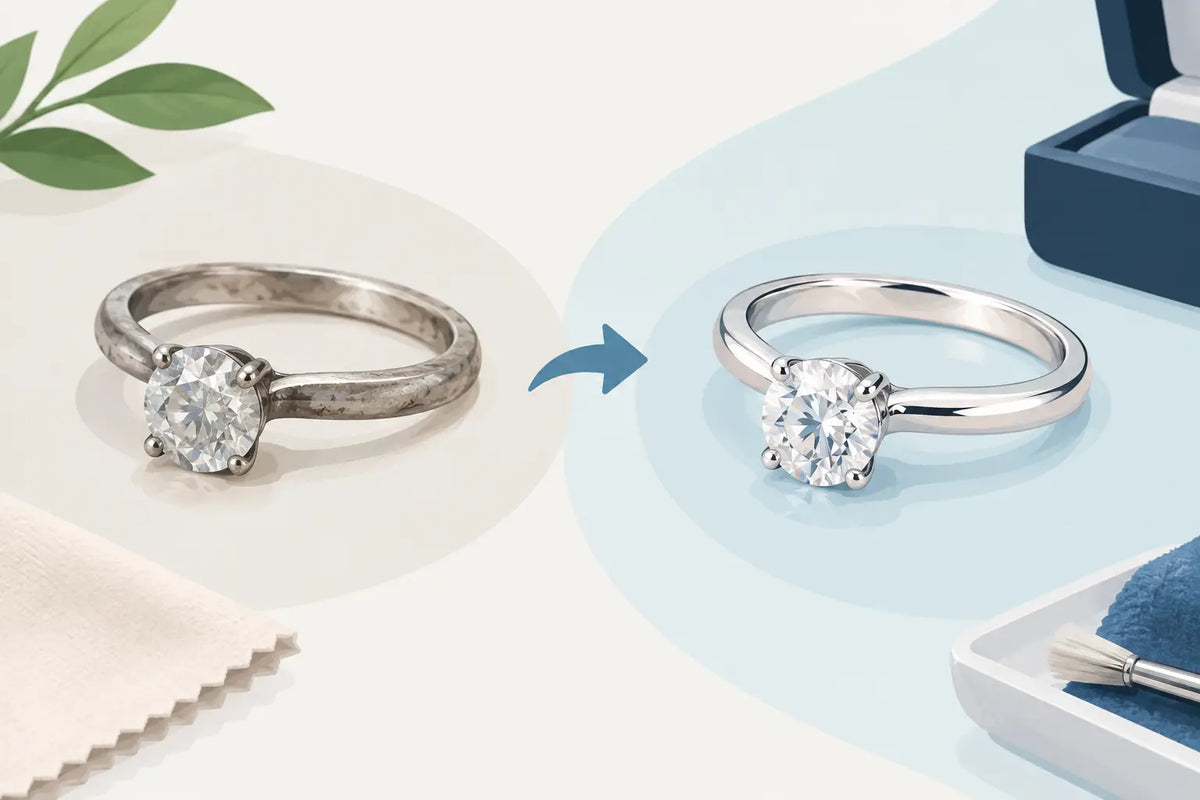
This is the difference between storing an heirloom and restoring one with intention. The original ring had been protected from life. The renewed ring was ready to enter it.
It also gave the client a new relationship to the piece. Rather than feeling responsible for preserving a fragile object exactly as it was, she could make it part of her own rituals. She wore it to work, at dinner, and on weekends away. It became an everyday signature, not an artifact reserved for special occasions.
When Restoration Is the Right Choice
Not every inherited piece needs to be remade. Sometimes a simple repair, such as rebuilding worn prongs, reinforcing a shank, or cleaning a setting, is the most respectful path. If a design feels authentic to the wearer and remains structurally sound, preserving it as closely as possible can be deeply satisfying.
A redesign becomes meaningful when the original piece is no longer wearable, when its style feels disconnected from the person receiving it, or when several inherited elements can be brought together in one new heirloom. The right approach depends on sentiment, material condition, and the future life imagined for the jewelry.
The most successful restorations do not treat memory as fragile. They treat it as something capable of changing form. If a beloved piece is waiting in a drawer, begin by asking not what it used to be, but how you hope it will be remembered when it catches the light on your hand again.