A Bespoke Ring Example for a Lasting Heirloom
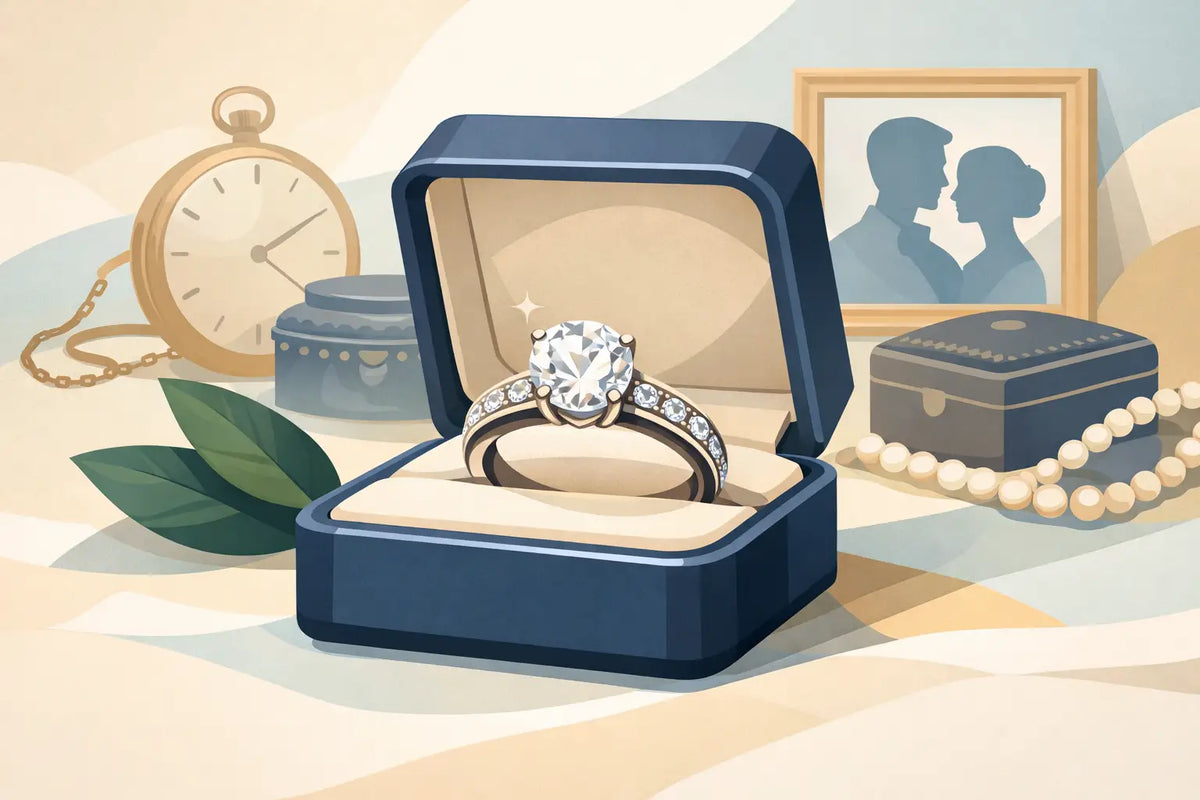
A bespoke ring example is rarely just a sketch of a beautiful setting. It may begin with a grandmother’s diamond kept in a small velvet box, the pale blue of a favorite summer horizon, or the wish to mark a season of life with something that feels entirely your own. The finished ring holds those beginnings close, becoming part of the hand that reaches for coffee, gathers flowers, and turns the pages of years to come.
Custom jewelry is an intimate process because the choices are personal. A stone can carry history. A silhouette can recall a place. Even the quietest detail, visible only to the wearer, can make a ring feel like a private letter in gold. The purpose is not to create more ornament, but to make an object with a life beyond the occasion for which it was made.
What Makes a Ring Truly Bespoke?
A bespoke ring is designed from the ground up around a particular person, story, or stone. Rather than selecting a finished style and adjusting a few details, you begin with an idea and give it shape through conversation, materials, proportion, and craft.
That distinction matters. A custom ring might mean choosing a different gemstone for an existing design. Bespoke work has a wider horizon. The setting, profile, metal, scale, engraving, and stone arrangement are considered together, so the ring feels coherent from every angle.
The most enduring designs often have a sense of restraint. They do not need to announce every element of their story at once. A softly sculpted band, a low-set stone, or a hidden engraving can hold meaning with more grace than a detail added simply because it is available. Bespoke does not have to mean elaborate. It means intentional.
The starting point can be beautifully ordinary
Some of the best ideas arrive without a formal brief. You may have an heirloom gemstone that deserves a new setting, a ring you wear every day but wish were more substantial, or an image saved years ago because its proportions felt familiar. A meaningful starting point can also be less tangible: salt air after a family holiday, the color of late-August light, a name, a date, a promise to yourself.
From there, practical questions bring the vision into focus. Will this be an everyday ring or one reserved for evenings and milestones? Should it stack easily with wedding bands and other favorites? Does the wearer prefer a quiet profile that sits close to the hand, or a stone with a little more presence? These decisions are not separate from the romance of the piece. They are what allow it to become part of a real life.
A Bespoke Ring Example Rooted in Memory
Imagine a woman with three small diamonds inherited from her mother: one from an engagement ring that no longer suits her style, two from delicate earrings that have spent decades in a drawer. Their value is not only in their sparkle. They bring with them holiday dinners, photographs, familiar hands, and the memory of being young enough to borrow jewelry from a dressing table.
She does not want to recreate the original pieces. Instead, she wants a ring she can wear with a white linen shirt, on a plane, or while walking near the water. The design begins with a warm 18-karat yellow gold band, gently rounded rather than sharply polished. The largest diamond is placed low in a bezel setting, so its edges are protected and its light feels contained, like sunlight caught in a pool. The two smaller stones sit asymmetrically along the band, close enough to read as a constellation rather than a matched pair.
On the inside, a brief engraving records her mother’s initials. It is not visible to anyone else. That is precisely the point.
This bespoke ring example works because it balances sentiment with wearability. The diamonds are given a fresh composition, but their history remains intact. The gold is substantial enough to feel lasting, yet the ring is not so ornate that it waits for a special event. It becomes a new heirloom by being worn now.
Why asymmetry can feel more personal
Perfect symmetry has its place, especially in classic engagement rings and formal styles. But an asymmetric arrangement can be especially resonant when working with inherited stones of different sizes or shapes. It allows each gem to retain its character without forcing a uniformity that was never part of its story.
A slightly off-center stone, a tapered band, or a cluster that follows the natural curve of the finger can feel quietly modern while still remaining timeless. The trade-off is that proportion becomes even more essential. Asymmetry should feel considered, not accidental. A skilled designer studies how the ring looks from above, from the side, and alongside the pieces already in your jewelry box.
Choosing Details That Will Age Beautifully
A ring meant for frequent wear should be designed with daily life in mind. This does not mean every custom piece must be minimal. It means the construction should honor the way you live.
A high setting can give a center stone dramatic presence, but it may catch on knits or feel less comfortable for someone who works with her hands. A bezel can offer a smooth, protective frame around a gemstone, while prongs allow more light to reach the stone and create a more traditional silhouette. Neither is inherently better. The right choice depends on the stone, the design, and how the ring will be worn.
Metal is equally expressive. Yellow gold has a soft, sunlit warmth and develops a gentle patina over time. White gold brings a cooler, more graphic effect, while platinum is prized for its density and naturally pale finish. Rose gold can feel romantic, though its color may not suit every inherited stone or every existing ring stack. Seeing stones beside different metals is often more revealing than imagining them in the abstract.
Texture is another way to make a piece personal. A high-polish finish feels luminous and formal, but it will show the tender marks of daily wear. A softly brushed or hand-finished surface can make those changes feel less noticeable, allowing the ring to become more beautiful through use rather than despite it.
The Emotional Value of Reworking an Heirloom
There can be hesitation around resetting inherited jewelry. Some people worry that changing an old piece means losing the person attached to it. Yet a jewel left unworn may become distant from the life it was meant to accompany.
Reworking an heirloom can be an act of care. The original ring, brooch, or earring may have belonged to another era, another wardrobe, another way of moving through the world. By preserving its stones or gold and giving them a form that suits you, you keep the connection active. The memory is not erased. It is carried forward.
Before beginning, take time to understand what can and cannot be reused. Older stones may need an appraisal or condition check, particularly if they have chips, worn girdles, or delicate cuts. Gold from an heirloom piece can sometimes be incorporated, but its age and alloy may make it unsuitable as the sole structural material for a new setting. In those cases, its sentiment can still be honored through a small accent, a melted detail, or an engraving inspired by the original.
At Fourteen August, this kind of transformation is approached as a conversation between what has been loved and what will be loved next. The goal is not to make the past look new. It is to let it continue speaking in a form that belongs to you.
Give the Design Room to Become Itself
The most satisfying bespoke rings are rarely rushed. Stone sourcing, design revisions, setting, finishing, and quality checks each need their own measure of attention. If the ring is intended for a proposal, anniversary, birthday, or family celebration, begin the process early enough that decisions can be made with clarity rather than urgency.
Bring references, but leave room for surprise. A photograph may reveal that you are drawn to a certain stone shape, while the final design may lead somewhere quieter and more individual. Trust the details that continue to feel right after the first rush of excitement has passed: the curve of the band, the way the ring rests against the skin, the small flash of color you notice when you move your hand in the light.
A bespoke ring earns its place not by being precious beyond use, but by becoming familiar. Let it collect sunlight, fingerprints, and the soft evidence of a life well lived. That is how a personal piece becomes an heirloom.