How to Preserve Jewelry Memories for a Lifetime
A gold ring warm from your mother’s hand. A charm collected on a summer spent near the water. Diamond studs worn at the dinner where everything changed. To preserve jewelry memories is not simply to protect precious materials. It is to honor the small, private history held within them - the hands that wore them first, the places they traveled, and the life they have quietly witnessed.
Fine jewelry earns its meaning gradually. A piece may begin as a birthday gift or a personal indulgence, then become part of the rhythm of a life: worn on ordinary Tuesdays, packed for faraway weekends, passed across a table to a daughter. Caring for it thoughtfully allows that story to remain visible, wearable, and ready for its next chapter.
Preserve Jewelry Memories by Wearing Them Well
There is a temptation to reserve sentimental jewelry for rare occasions. Some pieces do require a gentler life, especially antique settings, fragile enamel, soft stones, or strands of pearls. Yet many fine jewelry pieces are made to be lived in. A necklace worn against sun-warmed skin or a signet ring that becomes familiar on the hand gathers meaning through use.
The distinction is care, not fear. Remove rings before gardening, exercising, swimming, or using household cleaners. Chlorine, saltwater, and beauty products can dull metal and affect delicate stones over time. Put jewelry on after sunscreen, perfume, and lotion have settled, and take it off before bed if it may catch, bend, or press against another piece.
Pay attention to the quiet signs of daily wear. Prongs can loosen gradually. Clasps may thin at their most-used point. A chain that suddenly catches in a sweater is asking for attention. Addressing these details early is not fussy maintenance. It is how a beloved piece remains strong enough to be worn, rather than stored away in a drawer.
Let the Story Travel With the Piece
An heirloom’s value cannot always be measured by its weight or its stones. Often, the detail that matters most is the one no jeweler could identify: the date a bracelet was given, the name of the beach where a charm was found, the reason a grandmother always wore a particular ring on her right hand.
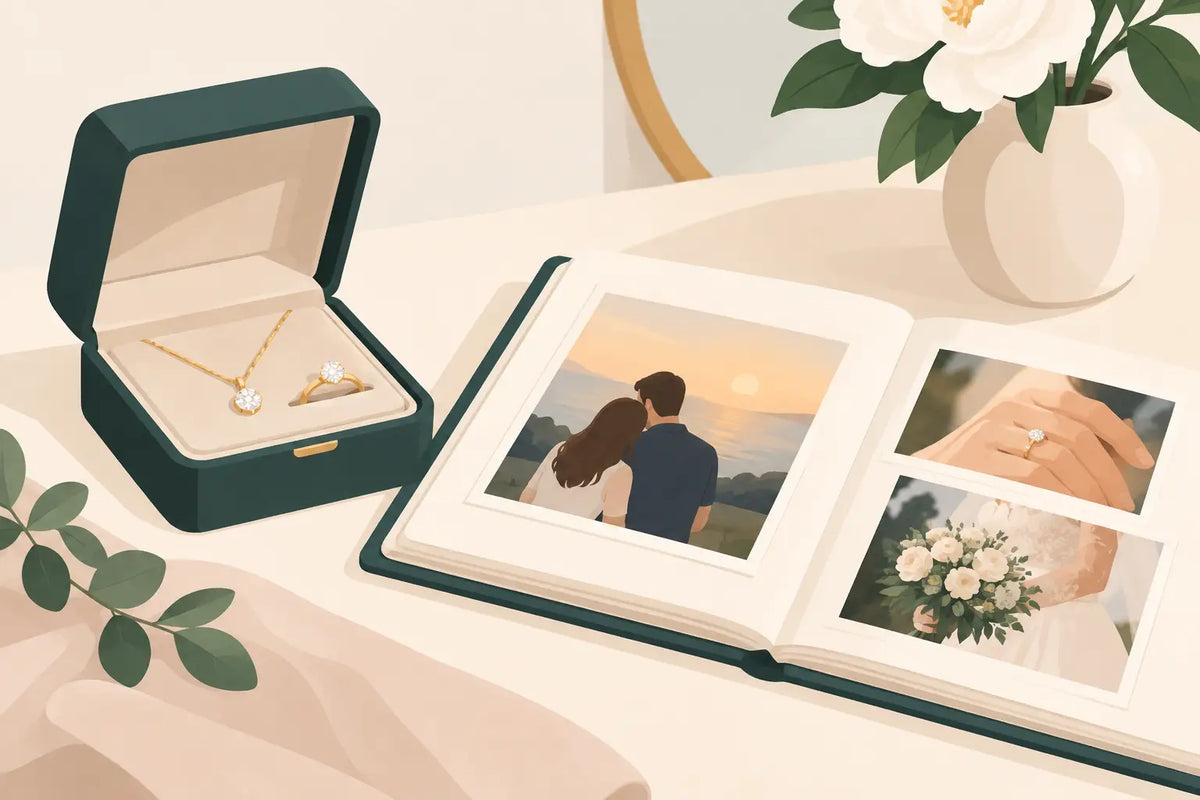
Write these details down while they are still easy to recall. A small card kept with a jewelry box can hold the essentials: who owned the piece, when it entered the family, what it marked, and any repair or redesign it has undergone. For more layered stories, create a private digital album with photographs of the jewelry being worn alongside a few sentences in the owner’s own voice.
This is especially meaningful before a piece is passed on. The recipient may know that a necklace belonged to her mother, but not that it was purchased after her first promotion, worn through every family holiday, or chosen because its color recalled the sea. Context turns an object into a living inheritance.
Photograph jewelry in natural light, both on and off the body. Include close images of engravings, hallmarks, unusual settings, and the gentle wear that gives a piece its character. If something is ever lost, these photographs can be practically useful. More importantly, they preserve the visual language of a life - a familiar chain at the collarbone, a wedding band beside a favorite linen cuff.
Storage Is Part of the Ritual
The way jewelry is put away shapes how it lasts. Tossing pieces together invites scratches, tangled chains, and unnecessary strain on delicate clasps. A lined box with separate compartments is ideal, but thoughtful separation matters more than an elaborate system.
Store necklaces individually so their chains do not knot. Keep rings and bracelets apart when possible, particularly if they feature stones that can scratch softer metals or gemstones. Pearls deserve their own soft pouch or fabric-lined space. Because they contain natural moisture, they are happiest outside airtight plastic and away from intense heat.
A cool, dry place away from direct sunlight is generally best. Bathrooms may be convenient, but lingering humidity and the residue from sprays or lotions make them less than ideal for long-term storage. For jewelry you wear frequently, a small tray near where you dress can turn removal into a deliberate evening ritual rather than a hurried habit.
If a piece carries deep sentimental weight, consider where it lives when it is not being worn. The right storage place should be both protected and accessible. Jewelry kept so safely that it disappears from daily life may be physically preserved, yet emotionally distant. The goal is to keep memory close without exposing it to unnecessary risk.
Cleaning With a Light Hand
Not every cherished piece should be cleaned in the same way. Gold and diamonds can often tolerate a gentle bath in warm water with a small amount of mild soap, followed by a very soft brush and a lint-free cloth. But older jewelry, gemstones, pearls, opals, emeralds, turquoise, coral, enamel, and pieces with glued settings may need a different approach.
When you are uncertain, do less. A soft, dry cloth can remove everyday surface residue without introducing moisture or abrasion. Avoid harsh chemical dips, abrasive toothpaste, and ultrasonic cleaners unless a trusted jeweler has confirmed that your specific piece can safely handle them. A shortcut that makes metal flash brighter for a moment can compromise a fragile setting or a stone with subtle internal character.
There is also beauty in a little softness. A well-loved gold bracelet may develop a warm patina, and a vintage ring may carry faint marks that speak to decades of wear. Restoration should protect a piece’s future, not erase every trace of its past.
When Restoration Becomes a New Chapter
Sometimes preserving jewelry memories means changing the form of a piece so it can be worn again. A single inherited earring can become a pendant. Several family stones can be gathered into a ring with a new silhouette. A worn chain can be replaced while its original charm remains close to the heart.
This choice is personal. Some families want an heirloom left entirely untouched, including its age marks and original setting. Others feel that a piece kept unworn in a box is waiting for a more useful future. Neither instinct is more respectful. The most considered decision is the one that honors both the history of the jewelry and the life its next wearer hopes to lead.
Before beginning a redesign, photograph the original piece from every angle and record its story. Ask what elements must remain: a grandmother’s engraving, the curve of a setting, a stone that has become synonymous with someone you love. Then consider how the jewelry will be worn. A design that suits an everyday wardrobe is more likely to become part of someone’s real life, rather than a beautiful object saved for a someday that never arrives.
At Fourteen August, the idea of renewing cherished jewelry into new heirlooms begins with this same respect: preserving what matters while allowing the piece to feel at home in the present.
Give Meaning a Place to Gather
A jewelry collection becomes more resonant when its pieces are allowed to speak to one another. A new charm can mark the birth of a child. A ring might commemorate a personal turning point. Earrings chosen on a long-awaited trip may carry the atmosphere of that place home with them.
You do not need to assign a grand meaning to every acquisition. The loveliest collections often hold both the ceremonial and the everyday: a treasured engagement ring beside a small gold hoop worn every morning. What matters is choosing with enough intention that, years later, each piece offers a clear feeling rather than a vague receipt.
Consider sharing the story when you give jewelry, too. Tuck a handwritten note into the box. Name the moment you hope the piece will remember. A few honest lines can outlast wrapping paper, and may one day become part of the heirloom itself.
Jewelry lasts because it is made with care. Memory lasts because someone takes the time to name it. Wear the pieces that make you feel connected, protect them with a gentle hand, and leave enough of the story behind for someone else to carry it forward.