Can Gold Jewelry Get Wet? Everyday Care Notes
A gold chain catching the light after an afternoon by the water feels like summer at its most effortless. Yet the question remains: can gold jewelry get wet without compromising the piece you reach for every day? Usually, yes - but the kind of gold, the stones it carries, and the water itself all shape the answer.
Fine jewelry is made to be lived in, not hidden away for a future occasion. Still, a small measure of care protects its warmth, polish, and the memories it gathers along the way.
Can Gold Jewelry Get Wet?
Solid gold jewelry can generally tolerate brief contact with fresh water. Washing your hands with a gold ring on, getting caught in rain, or wearing a necklace through a humid summer day is unlikely to harm solid 14k or 18k gold. Gold itself does not rust or tarnish as readily as many other metals.
But most fine gold jewelry is an alloy, meaning pure gold is blended with other metals for strength, color, and wearability. The higher the karat, the more gold the piece contains and the softer it may be. Those accompanying metals can respond differently to repeated moisture, residue, and chemicals over time.
Water is rarely the real concern on its own. What comes with it matters more: chlorine from a pool, salt from the sea, mineral deposits in hard water, soap, sunscreen, shampoo, and lotion. These can leave a film over gold, dull a polished surface, or work their way into the small spaces around a setting.
A moment of fresh water is one thing. A daily habit of showering, swimming, or soaking in a hot tub while wearing jewelry is another. Fine pieces deserve the same gentle attention we give the things meant to stay with us.
The Type of Gold Changes the Answer
Solid gold is the most forgiving
Solid 14k and 18k gold are excellent choices for frequent wear because the gold runs through the piece rather than sitting only on the surface. If a solid-gold bracelet gets splashed, simply dry it well with a soft, lint-free cloth.
That durability does not make solid gold invincible. Chlorine can weaken metal alloys over time, particularly in delicate chains, prongs, and clasps. Repeated exposure to saltwater can leave residue in textured details or behind stones. If you are headed into the ocean or pool, leaving meaningful jewelry safely ashore is the wiser ritual.
Gold-plated and gold vermeil pieces need more protection
Gold-plated jewelry has a thin layer of gold over a base metal. Gold vermeil is typically a more substantial gold layer over sterling silver, but it still depends on that outer finish remaining intact. Frequent water exposure can gradually wear away the gold layer, especially where a ring meets the skin or a chain moves against the collarbone.
With plated or vermeil jewelry, remove pieces before showering, exercising, swimming, or applying fragrance and body products. This is less about being precious and more about preserving the color and finish you chose in the first place.
White gold has its own finish to consider
White gold is often coated with rhodium to create its bright, cool sheen. Water itself will not immediately remove that finish, but everyday wear, soaps, chlorine, and friction can make the rhodium plating fade sooner. When a white gold piece begins to show a warmer cast, professional replating can restore its crisp appearance.
When Stones Make Water a Risk
A gold setting may be comfortable around water while the gemstone in it is not. This is where care becomes more particular.
Diamonds, sapphires, and rubies are generally durable enough for normal, occasional contact with fresh water. Even then, soap and lotion can cloud their brilliance, especially beneath the stone where buildup is easy to miss. A ring may look suddenly less luminous not because anything is wrong, but because a soft veil of residue has settled over it.
Pearls require much more restraint. They are organic and porous, with a delicate nacre that can be affected by water, soap, perfume, hairspray, and sweat. Remove pearl jewelry before bathing or swimming, then wipe it softly after wear. Its gentle glow is best preserved through a quiet, consistent routine.
Opals, emeralds, turquoise, coral, lapis, and other softer or porous stones also deserve caution. Some emeralds are treated with oils or resins that can be disturbed by heat or harsh cleaning. Opals can be sensitive to rapid temperature changes. Turquoise and coral may absorb products or discolor. When in doubt, keep these pieces dry and clean them only with a soft cloth.
Vintage and heirloom jewelry calls for the same thoughtful approach. An older piece may have worn prongs, an aging adhesive, or a setting that has loosened with time. Its story is part of its beauty, but it may need more protection than a newly made ring.
Water to Avoid While Wearing Fine Jewelry
There is no need to remove a solid gold ring every time a raindrop lands on your hand. Still, certain settings make taking jewelry off the easy, sensible choice.
Chlorinated pools and hot tubs are the clearest example. Chlorine is harsh on metal alloys and can affect the integrity of delicate components with repeated exposure. Ocean water brings salt, sand, and the chance that a ring slips away in the surf before you realize it is gone.
Showers and baths are less dramatic but not ideal for daily wear. Shampoo, conditioner, body wash, and oils leave residue that softens gold’s shine and mutes the fire of gemstones. A warm bath also makes fingers swell and then shrink, which creates an easy moment for a ring to slide off unnoticed.
Exercise is another occasion to pause. Sweat is not inherently destructive, but it combines with skincare, friction, and the possibility of catching a chain or bending a delicate setting. Set your jewelry somewhere intentional before a workout, rather than on the edge of a sink or tucked into a towel.
A Simple Care Ritual After Jewelry Gets Wet
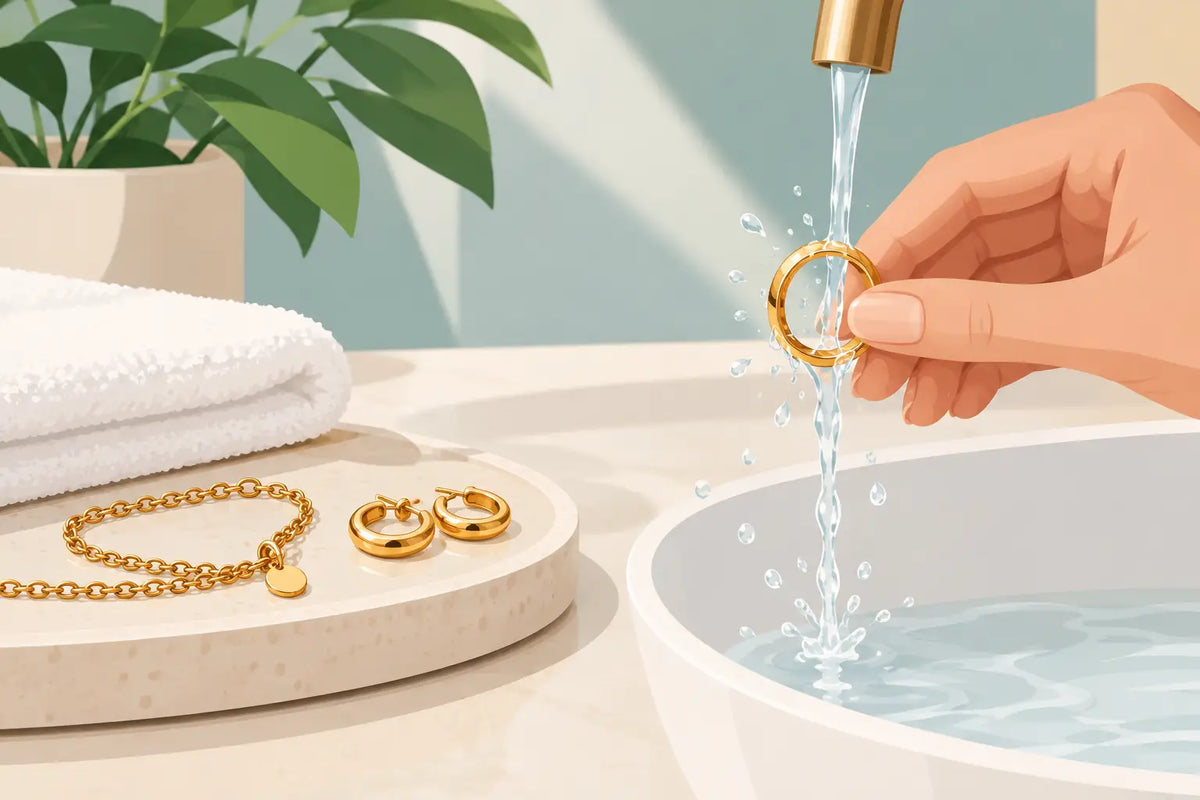
If your gold jewelry gets wet, there is no need for alarm. Pat it dry promptly with a clean, soft cloth. Let intricate pieces air-dry fully before placing them in a jewelry box, particularly chains, charm necklaces, and rings with stones or detailed settings.
For solid gold jewelry that has collected ordinary soap or lotion residue, a brief bath in lukewarm water with a small amount of mild soap can be appropriate. Use a very soft brush only if the piece has no fragile stones, pearls, enamel, or vintage components, and do not scrub with force. Rinse carefully, dry thoroughly, and avoid paper towels, which can be more abrasive than they seem.
Do not use toothpaste, baking soda, bleach, or household cleaners. These shortcuts can scratch metal, dull finishes, or create problems for stones and settings. Ultrasonic cleaners are not universally safe either, particularly for treated gems, pearls, opals, emeralds, and older jewelry. A professional jeweler can advise on the right method for a specific piece.
Make Removal Part of the Rhythm
The most useful habit is also the simplest: make a small place for your jewelry before water, sleep, exercise, or skincare. A dish on the vanity, a fabric-lined box near the sink, or a travel pouch in your beach bag turns care into an easy instinct.
This does not mean jewelry should feel fragile. The right pieces become part of your life - warmed by the skin, worn through dinners and departures, held in photographs years later. Thoughtful care simply keeps their surfaces bright and their settings secure, so the memory stays with the piece long after the salt air has lifted.