Birthstone Jewelry That Holds Your Story
A stone chosen for the month you were born can become far more than a pretty detail. Birthstone jewelry gives a private history a visible form: a child’s first summer, the month two people met, a mother’s place at the center of a family, or a milestone that changed everything. Set close to the skin, it becomes part of the everyday ritual of getting dressed, catching the light with each movement.
The enduring appeal is not superstition alone, though the old symbolism can be lovely. It is the intimacy of the choice. A birthstone makes a piece feel specific without asking it to announce its meaning to every room. For those drawn to fine jewelry with a life beyond a single occasion, that quietness is part of its power.
Why Birthstone Jewelry Feels So Personal
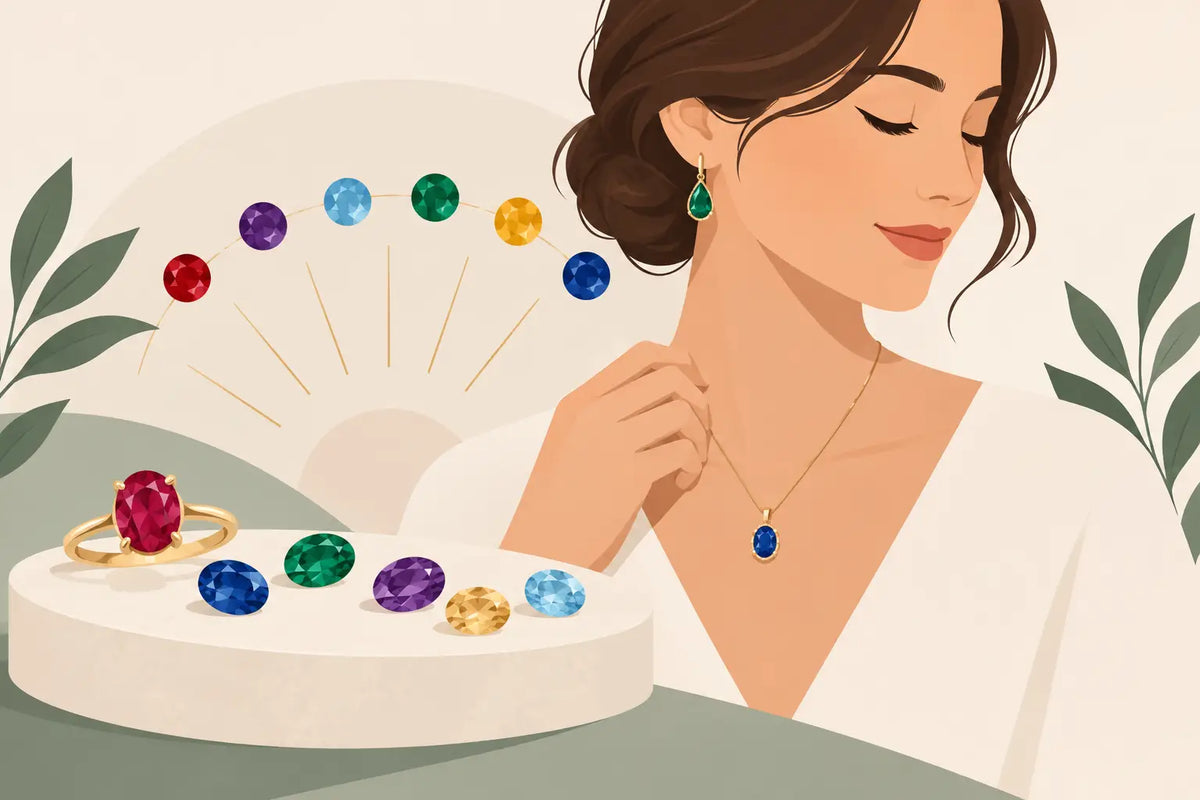
A birthstone offers a starting point, not a rule. January’s garnet carries its deep, wine-dark warmth; May’s emerald evokes new leaves after rain; August’s peridot has the fresh, sunlit green of late summer. Each stone arrives with a color story, a traditional association, and often a memory waiting to be attached.
But the most meaningful pieces are rarely limited to one person’s month. A necklace may hold the stones of children or grandchildren. A ring can pair two months to mark a marriage, friendship, or shared family name. A charm bracelet can grow gradually, with one addition for each chapter. The result is jewelry that reads like a small, private archive.
This is why birthstones remain especially compelling as gifts. They acknowledge who someone is rather than simply what they might want. A well-made piece says, with restraint, I remembered the date. I understand the story. I chose something intended to stay.
Tradition, without the pressure of rules
Birthstone lore has shifted across centuries, cultures, and calendars, so there is no need to treat a modern list as fixed doctrine. Some people prefer a stone for its traditional symbolism, such as sapphire for September or diamond for April. Others are led by color, selecting a blue topaz instead of turquoise, or a rich ruby-red spinel in place of a conventional July ruby.
That freedom matters. Jewelry meant to become an heirloom should feel true to its wearer. If a particular gem recalls sea glass found on a favorite shore, a grandmother’s velvet ring box, or the pale blue of a newborn’s nursery, that is reason enough.
Choosing a Birthstone Piece You Will Wear Often
The most successful birthstone jewelry does not wait in a box for an anniversary dinner. It slips naturally into a life. Before choosing a design, consider how the piece will live with you: against a crisp white cuff, layered over a swimsuit on a long August afternoon, or worn beside a wedding band every day.
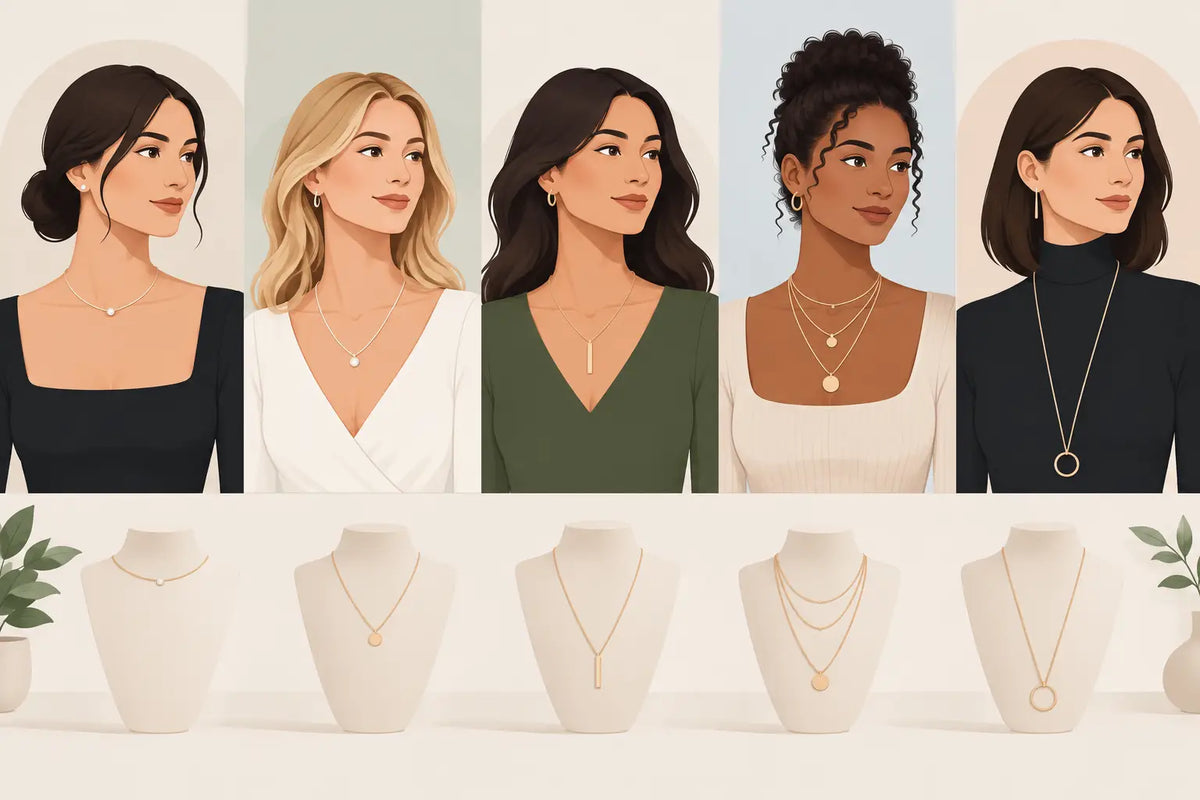
A pendant is often the most versatile place to begin. It keeps a single stone close and offers enough space for a design that feels considered rather than overly literal. A small gemstone set in gold can be quietly luminous on its own, while a more sculptural charm brings movement and personality to a chain.
Rings have a different intimacy. They are always in view, catching your eye as you reach for a coffee cup, take a hand, or turn a page. A bezel setting can create a clean, modern edge and offers welcome protection for an active lifestyle. Prong settings allow more light into a stone and can lend a softer, more classic feeling, though they may require a little more attention over time.
Earrings make a beautiful answer for someone who prefers subtle sentiment. A pair of studs in a child’s birthstone can become a daily signature, while a drop earring introduces color near the face without requiring a large gem. For a family story with several dates attached, charms and layered necklaces often offer more flexibility than trying to fit every stone into one formal composition.
Consider the stone’s character, not just its color
Not all birthstones are equally suited to the same kind of wear. Diamond, sapphire, ruby, and spinel are generally resilient choices for rings that see daily use. Emerald, opal, pearl, turquoise, and peridot have their own beauty, but benefit from more thoughtful handling. Their relative softness, inclusions, or sensitivity to heat and chemicals may make a pendant, earring, or protected setting a more practical choice.
This is not a reason to avoid a beloved stone. It is an invitation to design around it well. An opal can be exquisite in a carefully made pendant. An emerald can be wonderfully personal in a low-profile setting that honors its natural character. Fine jewelry should be worn, but it should also be chosen with an honest understanding of the life it is meant to lead.
Gold color shapes the mood, too. Yellow gold deepens warm stones such as citrine, garnet, and peridot, and lends a familiar, heirloom softness. White gold or platinum can sharpen the cool clarity of aquamarine, sapphire, and diamond. Rose gold brings a gentle blush to morganite, pink tourmaline, and pale amethyst. There are no absolutes here. Often the right choice is simply the metal you already wear most, so the new piece becomes part of your existing rhythm.
Designing for One Story or Many
A single birthstone has the elegance of a monogram. It can stand for the wearer, making a birthday feel less like a date on the calendar and more like a personal emblem. This approach is ideal for a first fine-jewelry gift, a graduation, or a piece chosen to honor one’s own becoming.
Multiple stones create a more layered narrative. A mother may choose each child’s month in chronological order, or place her own stone at the center and arrange the rest around it. Partners may choose two stones side by side, equal in scale, to honor a shared life without relying on initials or engraving. For a family with many meaningful dates, restraint is often what keeps the design timeless: smaller stones, a thoughtful palette, and enough space for each gem to be seen.
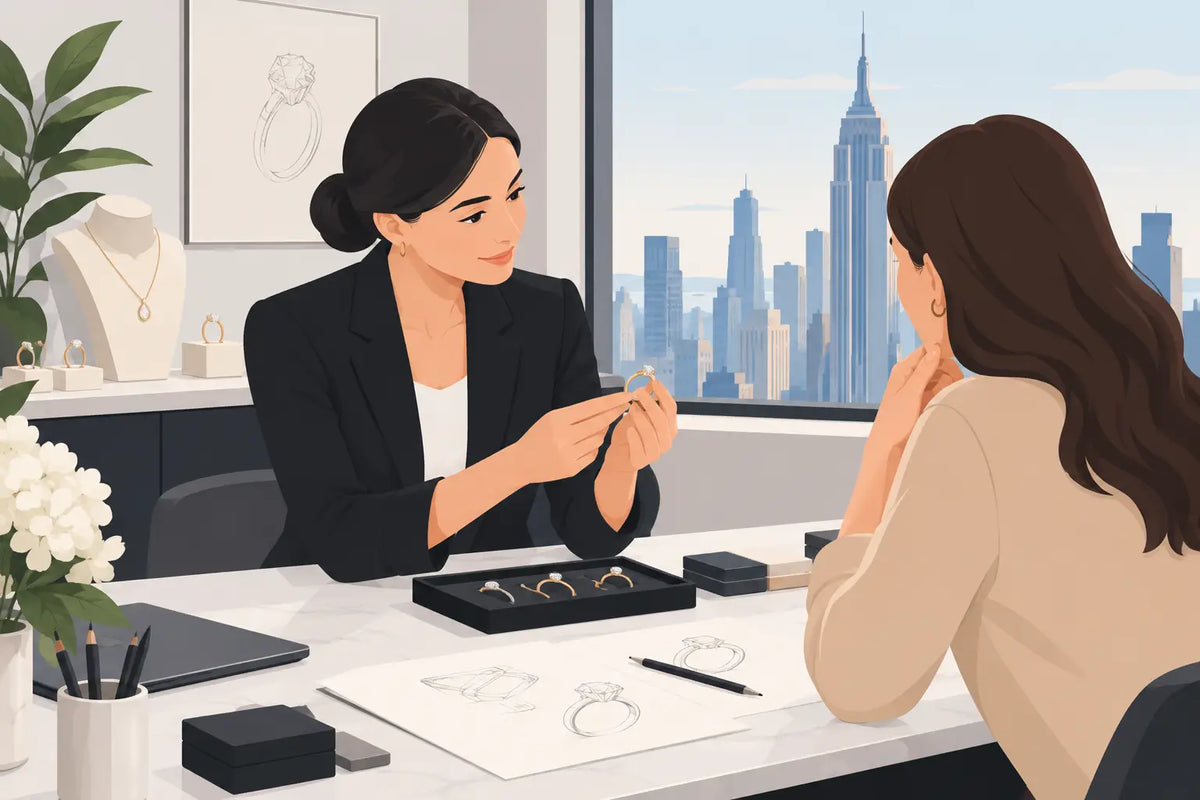
Custom design becomes particularly meaningful when the story is not easily captured by a standard layout. Perhaps an inherited sapphire deserves to be reset with newer family stones. Perhaps a grandmother’s ring holds gold that can be transformed into a pendant for the next generation. Fourteen August approaches these decisions with the understanding that sentiment is not an embellishment. It is the material at the heart of the piece.
When repurposing heirloom jewelry, ask not only what can be preserved, but what should be carried forward. A dated setting may not suit the wearer, while the stone, metal, or even a subtle design reference can still hold the memory. The goal is not to freeze an object in time. It is to let it continue its story in a form someone will reach for now.
How to Keep the Meaning in the Wearing
Fine jewelry asks for a small measure of care in return. Remove pieces before swimming, gardening, intense exercise, or applying perfume and lotion. Store gemstones separately when possible, especially softer stones that can be scratched by diamond or sapphire. A gentle clean with warm water, mild soap, and a soft brush works for many durable gems, but pearls, opals, turquoise, and certain treated stones deserve more specific care.
An annual check by a jeweler is a worthwhile ritual, particularly for rings and pieces with prongs. It protects the practical investment, but it also creates a pause to notice the life the jewelry has lived with you: the softened glow of gold, the tiny marks earned through ordinary days, the familiar feel of a piece that no longer seems new because it has become yours.
Birthstone jewelry is at its most beautiful when it is not saved for a future worthy of it. Choose the stone that brings a person, a place, or a season close. Wear it in the sunlight, let it gather memories of its own, and one day let someone else recognize the story held there.