Solid Gold vs Vermeil Jewelry: Which Lasts?
A gold chain warmed by sunlight, a signet ring worn smooth at the edges, an earring chosen for an anniversary dinner - jewelry gathers meaning through repetition. When considering solid gold vs vermeil jewelry, the question is not simply which one is better. It is which material belongs in the life you imagine for the piece: the everyday rituals, the celebrations, the hands it may one day pass through.
Both can be beautiful. Both can offer the rich glow of gold against the skin. Yet they are made differently, wear differently, and ask for different kinds of care. Understanding those distinctions makes it easier to choose with intention.
Solid Gold vs Vermeil Jewelry: The Essential Difference
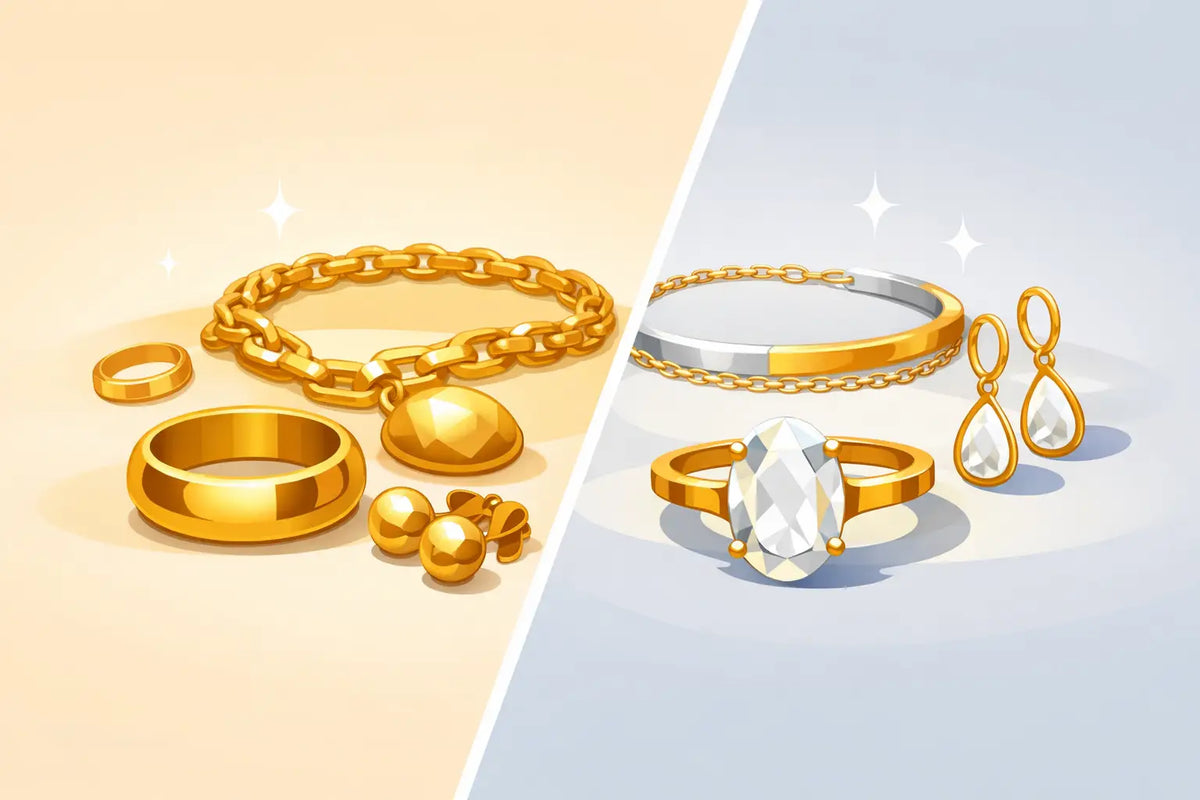
Solid gold jewelry is gold all the way through. It is usually an alloy, rather than pure 24k gold, because pure gold is quite soft for everyday jewelry. In the United States, pieces are commonly made in 10k, 14k, or 18k gold. The karat number tells you how much pure gold is present in the alloy: 14k is 58.3 percent gold, while 18k is 75 percent gold.
Gold vermeil, pronounced ver-may, begins with a sterling silver base that is covered in a substantial layer of gold. In the United States, vermeil must be made with sterling silver and plated with at least 10k gold that is at least 2.5 microns thick. That standard distinguishes it from ordinary gold-plated jewelry, which may use a base metal and a much thinner layer of gold.
The visual effect can be remarkably similar at first glance. The difference reveals itself over time. Solid gold retains its color because there is no outer plating to wear away. Vermeil offers a more accessible way to enjoy gold's warmth, but its finish is ultimately a surface that needs thoughtful treatment.
Why Solid Gold Is Made for a Life Well Worn
Solid gold carries a quiet practicality beneath its romance. It can accompany you through the ordinary moments that become the most personal: a morning swim skipped only because you forgot to take off your ring, a long flight, a newborn held close, years of reaching for the same necklace without thinking twice.
Because the gold runs throughout the piece, scratches do not expose another metal underneath. A polished solid gold ring may collect small marks over time, particularly in a higher-karat alloy, but those marks are part of the same material. A jeweler can often polish, repair, resize, or restore solid gold with greater ease than plated jewelry.
That durability makes solid gold especially fitting for pieces meant to become signatures: wedding bands, everyday chains, charm bracelets that grow over the years, and rings that mark a private milestone. It is also a compelling choice for jewelry intended to remain in a family. Gold has a way of holding both its intrinsic value and the memories attached to it.
Still, solid gold is not indestructible. Higher-karat gold is softer, and delicate designs can bend or catch if handled roughly. A fine chain deserves the same care as a silk blouse. The advantage is not that solid gold is immune to life, but that it can continue gracefully through it.
Choosing Between 14k and 18k Gold
For frequent wear, 14k gold is often a beautiful balance of color, strength, and longevity. Its alloyed composition gives it more resilience for rings, bracelets, and pieces that meet the world with you each day.
Eighteen-karat gold has a deeper, more saturated golden tone and a higher pure-gold content. It feels especially luminous in sculptural earrings, pendants, and designs where the color itself is part of the expression. It is somewhat softer than 14k, so the best choice depends on both the design and how you plan to wear it.
The Appeal of Gold Vermeil
Vermeil has its own place in a considered jewelry wardrobe. It gives designs a generous-looking golden finish while keeping the price below that of solid gold. For a statement earring reserved for summer dinners, a trend-led silhouette you may not wear forever, or a gift chosen for its immediate sentiment, vermeil can be a lovely option.
A well-made vermeil piece should feel substantial, with a sterling silver foundation and a properly thick layer of gold. It is a more elevated category than flash plating, but it is not a substitute for solid gold. The distinction matters most when a piece will be exposed to constant friction, moisture, skincare, and movement.
Think of vermeil as jewelry for a particular rhythm of wear. A pair of earrings may remain radiant for years when stored carefully and worn occasionally. A ring worn while washing hands, lifting bags, applying hand cream, and sleeping may show wear much sooner. Neither outcome is a failure of style. It is simply the nature of a plated surface.
How Vermeil Changes Over Time
The gold layer on vermeil can gradually wear thinner, especially on high-contact areas. Rings often show this first along the palm side of the band. Bracelets may wear at the clasp and where they rest against a desk. Pendants and earrings generally experience less abrasion and can preserve their finish longer.
When the plating wears through, the sterling silver beneath may become visible. This does not mean the piece has lost its worth or its story, but it may no longer have the uniform gold appearance you first loved. Depending on the design, vermeil can sometimes be replated by a professional jeweler.
Tarnish is another consideration. Sterling silver can oxidize when exposed to air and moisture, particularly where the gold finish has thinned. Perfume, sunscreen, lotions, chlorinated water, and saltwater can all hasten wear. If the piece is part of a seaside weekend or a sunlit vacation, let it be the last thing you put on before dinner, not the accessory you take into the ocean.
Cost, Value, and the Meaning of Investment
Solid gold costs more because it contains substantially more gold. Its price reflects material value, craftsmanship, and the possibility of long-term repair and wear. For many people, that premium makes sense when the piece marks a once-in-a-lifetime occasion or is destined to become part of their daily uniform.
Vermeil can make sense when you want the look of gold without the same initial investment. It can also leave room in a jewelry budget for more than one silhouette, allowing you to play with scale, texture, and seasonal mood. The key is to buy it for what it is, rather than expecting it to perform exactly like a solid gold heirloom.
Value is personal, too. A solid gold locket may become more precious with every photograph and folded note it holds. A vermeil pair of earrings may carry the memory of a birthday trip, a first apartment, or a dress worn beneath late-August stars. Material longevity matters, but sentiment is never measured only in karats.
Which Is Better for Everyday Jewelry?
For jewelry you intend to wear nearly every day, solid gold is generally the wiser choice. This is particularly true for rings, bracelets, chains, and meaningful charms that will encounter water, friction, and frequent touch. It offers the freedom to wear a piece often without watching its finish fade.
Vermeil is often better suited to occasional earrings, pendants, and pieces you are happy to treat with a little more ceremony. If you prefer to rotate your jewelry, remove it before showering or exercising, and store it carefully, vermeil can remain beautiful for a long time.
Skin sensitivity can also shape the decision. Solid gold alloys and sterling silver are often well tolerated, but individual sensitivities vary. If you have a known metal allergy, ask about the full alloy composition, especially in earrings and pieces that sit closely against the skin.
Care That Preserves the Glow
Solid gold benefits from gentle cleaning with warm water, mild soap, and a soft cloth. Store it separately when possible to avoid scratches, and have prongs, clasps, and delicate settings checked periodically if you wear them often.
Vermeil asks for a lighter hand. Wipe it with a dry, soft cloth after wearing, keep it away from moisture and household chemicals, and store it in a soft pouch or dry jewelry box. Avoid abrasive polishing cloths and harsh cleaners, which can remove the plating along with tarnish.
The most useful habit is simple: put jewelry on after fragrance, hair products, sunscreen, and lotion have settled. A small pause in the ritual can keep a favorite piece luminous much longer.
A piece chosen for its beauty should also suit the life you want it to accompany. Choose solid gold when you want a lasting companion for your every day, and choose vermeil when its golden light fits the moment beautifully. The right jewelry is not merely something you own. It is something that, over time, feels unmistakably like yours.