Your Guide to Meaningful Jewelry Symbols
A small gold charm can carry a whole season: salt lingering in the air after a long August afternoon, the first letter of a child’s name, a promise made quietly and kept. This guide to meaningful jewelry symbols is not about assigning a fixed definition to every motif. It is about choosing the forms that make a piece feel unmistakably yours - something beautiful to wear now, and meaningful enough to pass on.
Fine jewelry becomes most lasting when it holds more than visual appeal. A symbol gives a necklace, ring, or bracelet an inner life. It can honor where you have been, mark what has changed, or keep someone close without explaining a thing to anyone else.
Why jewelry symbols endure
Symbols have always been a private language. Before they were engraved on charms or suspended from chains, they appeared in family crests, devotional objects, sailor’s keepsakes, and love tokens tucked into drawers. Their power lies in their ability to say much with little.
A meaningful motif does not need to be rare or obscure. A heart may feel timeless to one woman and too expected to another. An initial may honor a beloved person, a former name, or simply the self she is returning to. Meaning is shaped by the wearer, not dictated by the design.
That is also what makes symbolic jewelry such a thoughtful choice for milestones. A piece chosen for a birthday, a new child, a wedding, a graduation, or a season of reinvention can become richer over time. Years later, the original occasion remains, but new memories gather around it: sunlight on the skin, a hand held across the table, the familiar weight of gold worn every day.
A guide to meaningful jewelry symbols and their stories
The most resonant symbols tend to leave room for interpretation. Consider the visual language that already feels familiar to you, then let the piece become personal through how and when you wear it.
Hearts: devotion in its many forms
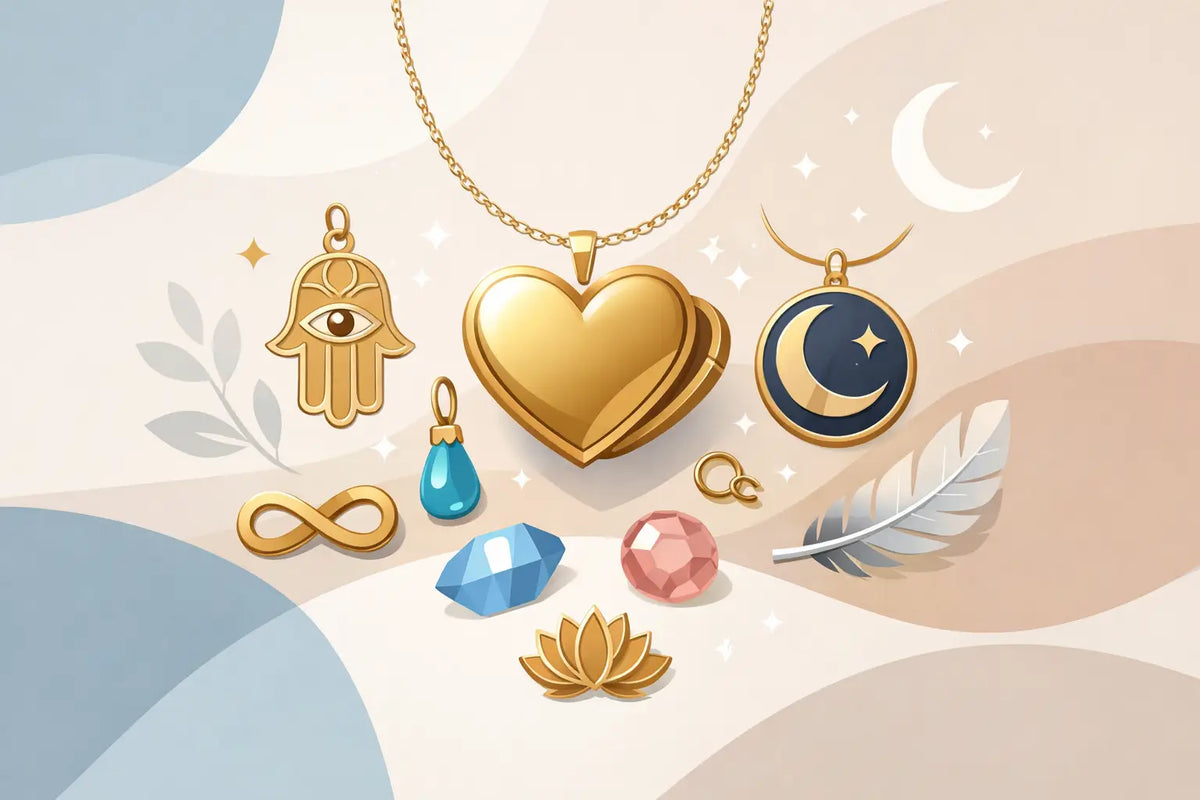
The heart is often associated with romance, but its meaning is wider and more enduring. It can represent a mother’s love, friendship that has outlasted distance, self-trust, or a memory that still feels warm. In fine jewelry, a softly shaped heart can feel refined rather than literal, especially when rendered in sculptural gold or set with a discreet stone.
For someone who prefers restraint, scale matters. A tiny heart charm worn close to the collarbone has a different character than a larger, more declarative pendant. Neither is more meaningful. The choice depends on whether you want the symbol to be a private reminder or a visible part of your signature.
Initials and monograms: identity made tangible
Initial jewelry has an intimacy that few symbols can match. It may be your own letter, the initials of children or partners, or an arrangement that quietly represents a family. Unlike a dated nameplate, a well-made initial charm or signet has the ease of a classic personal object.
There is a useful tension to consider here. A single initial is elegant and open-ended, while a grouping of letters tells a more specific story. If your family is growing or your definition of home is still changing, begin with one piece and add over time. A charm necklace can become a living record rather than a finished statement.
Celestial motifs: guidance, hope, and timing
Stars, moons, and suns speak to wonder without asking for explanation. A star can mark guidance during an uncertain chapter. A crescent moon may suggest renewal, intuition, or the beauty of becoming. The sun carries warmth, vitality, and the confidence of beginning again.
These motifs are especially fitting for jewelry that feels connected to place. A gold sun resting against the skin recalls late afternoons by the water; a small star can feel like a trace of night carried into daylight. At Fourteen August, that sense of sea air, summer light, and memory is part of what gives symbolic fine jewelry its emotional pull.
Ocean and nautical forms: connection to home
Shells, buoys, waves, anchors, and fish have long belonged to the vocabulary of coastal life. Their meanings vary. An anchor can represent steadiness, but it may also honor a harbor, a family tradition, or a person whose presence made you feel safe. A buoy is a marker in open water - a fitting emblem for resilience, direction, and return.
Nautical symbols are most compelling when they reflect a real relationship to the sea rather than a passing aesthetic. Perhaps summers were spent on one particular shore, or perhaps the ocean has always represented possibility. Let the memory lead. A motif with a true connection will remain beautiful after seasonal trends have moved on.
Locks, keys, and knots: what is kept and held
A key suggests access, independence, or the opening of a new chapter. A lock can signify protection, privacy, and devotion. Knots, with no clear beginning or end, are often chosen to honor enduring bonds.
These symbols suit moments of transition: moving into a first home, beginning a marriage, choosing a new path after loss, or recognizing a friendship that has become family. Their meaning can be tender without becoming overly sentimental, particularly in clean, architectural forms.
Birthstones and natural forms: a more subtle symbolism
Not every meaningful jewel needs a recognizable icon. A birthstone can honor a person or month, while a pearl may call to mind the sea, patience, and quiet radiance. Flowers, leaves, and vines can evoke growth, remembrance, and the particular landscape of a beloved place.
Gemstones invite nuance. Some people are drawn to traditional stone meanings, while others simply choose the color that recalls a child’s eyes, a favorite garden, or a summer sky. Both approaches are valid. The story is yours to attach, and it does not need to be shared to be real.
How to choose a symbol that will still feel like you
Begin with memory rather than symbolism. Instead of asking, “What does this charm mean?” ask which image returns to you without effort. It may be a tiny shell from a childhood beach, a sun from the morning you made an important decision, or a letter you have loved seeing in your grandmother’s handwriting.
Then consider the life the piece will lead. A delicate pendant may become an everyday constant, while a signet ring or sculptural earring can mark occasions with more presence. If you want to layer symbols, give each one room to breathe. A single pendant on a fine chain can be quietly powerful; a charm bracelet may be right when the story itself is meant to unfold in chapters.
Craftsmanship matters here because a symbolic piece is often worn more often and kept longer. Look for thoughtful proportions, secure settings, comfortable closures, and precious materials that will age with grace. Gold develops a soft familiarity over time. A small surface mark can become part of the record of a life well lived, though occasional care will preserve the details you love.
Let meaning evolve with you
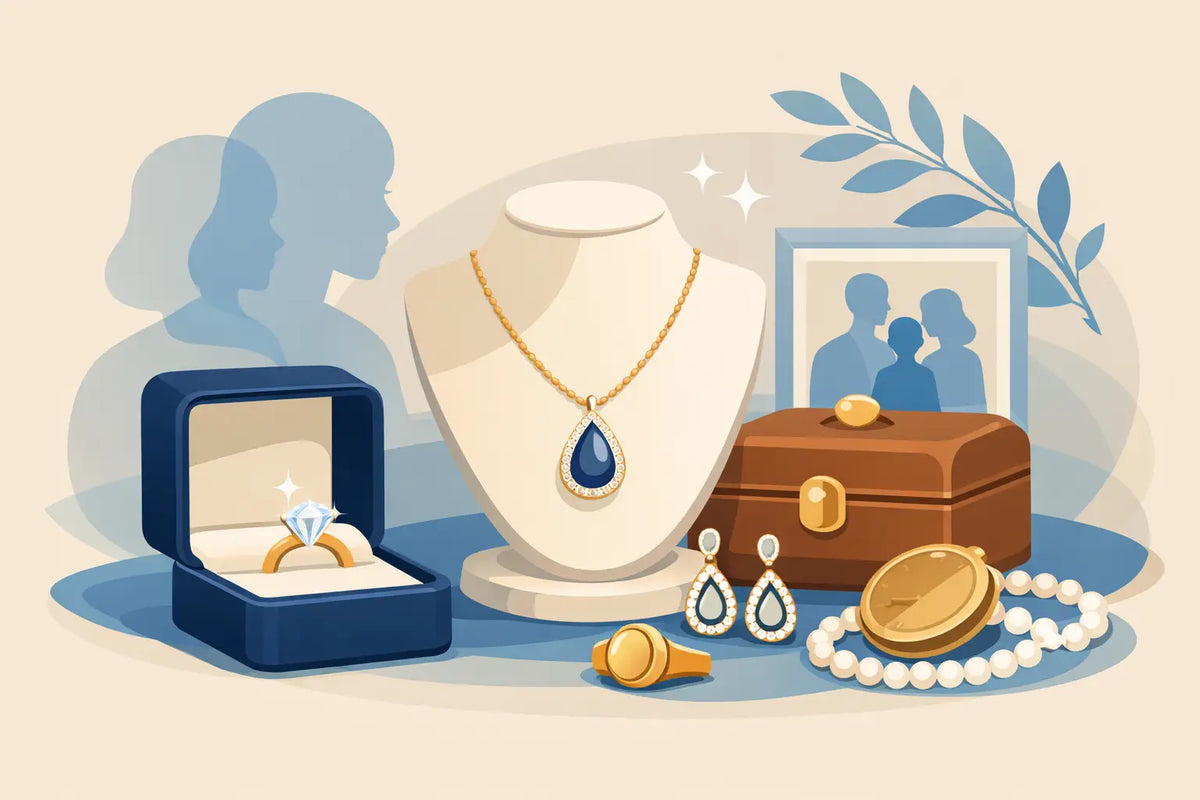
There is no need to choose one symbol that explains everything. The most personal jewelry collections are usually assembled slowly: a ring bought to celebrate oneself, a charm added after a new beginning, an inherited stone reset into a form that suits the present. This is where fine jewelry moves beyond adornment and becomes a form of continuity.
If you are reviving an inherited piece, preserve one element that carries the original spirit, whether it is a gemstone, an engraving, or the curve of a setting. Then allow the new design to reflect your own life. Honoring the past does not require wearing it exactly as it was.
For a gift, gentleness is often the best guide. Choose a symbol that recognizes the recipient without defining her too narrowly. A star can celebrate her steadiness. An initial can keep a loved one near. A sun can simply say: I see your light.
The right piece will not feel like a message you have to decode. It will feel familiar from the first clasp, then grow more precious as it becomes part of your days.